

June 27, 2026
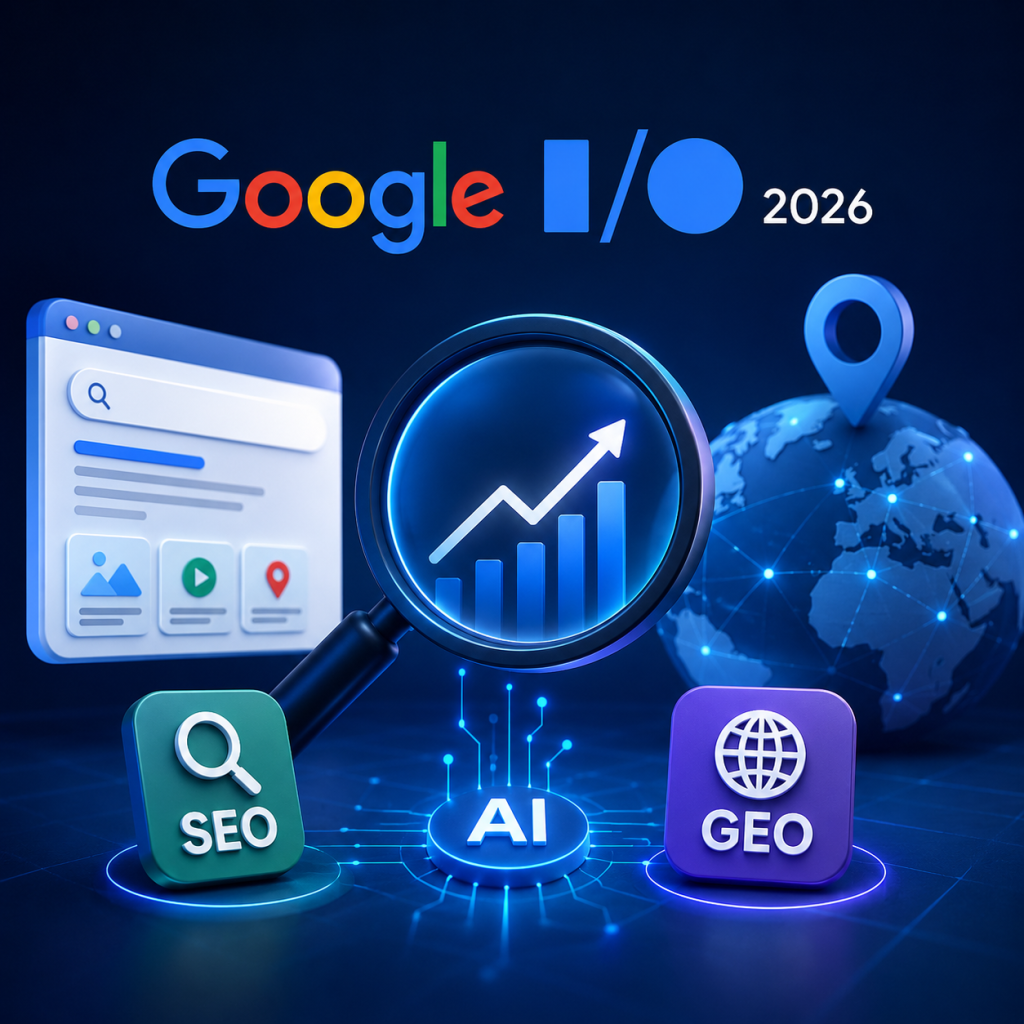
Every year, Google I/O provides a glimpse into the future of technology. However, Google I/O 2026 was different. Instead of simply introducing new products, Google unveiled a vision of an internet powered by AI agents, multimodal experiences, and personalized search journeys.
Google I/O 2026 marks Google’s full pivot into what Sundar Pichai called the “agentic Gemini era.” AI Mode has crossed 1 billion monthly users, and Search now plans, builds, and acts through agents. Headlines ran with “the era of 10 blue links is over,” but a Google spokesperson confirmed blue links are still displayed alongside AI responses; they’re just no longer the main event.
For businesses, marketers, and SEO professionals, these announcements signal a major shift in how users discover information online. Traditional SEO is no longer enough. The rise of Generative Engine Optimization (GEO) means brands must optimize not only for search rankings but also for AI generated answers, recommendations, and agent-driven experiences.
Important Announcement for SEO
Explores the five most significant Google I/O 2026 announcements, what they mean for Google IO 2026 SEO, and how businesses across countries such as India, the USA, Australia, and Canada can adapt to stay competitive.
Announcement: 1. Gemini 3.5 Flash Becomes the Default Model in AI Search
One of the most impactful announcements at Google I/O 2026 was the rollout of Gemini 3.5 Flash as the default model powering AI Mode in Google Search. Google confirmed that AI powered search experiences are expanding globally, fundamentally changing how users interact with information.
What This Means for SEO & GEO
AI no longer simply retrieves links, it synthesizes answers.
This means businesses must focus on:
- Creating content that directly answers user questions.
- Structuring information using headings, FAQs, and schema markup.
- Demonstrating expertise and trustworthiness.
- Publishing unique insights rather than generic content.
Country-Specific Impact
- India: Businesses targeting regional languages will benefit from optimized multilingual content.
- USA: Competitive industries will increasingly compete for citations within ai generated answers.
- Australia: Local businesses should prioritize entity optimization and topical authority.
- Canada: Bilingual SEO strategies (English and French) may become essential for broader AI visibility.
Announcement: 2. Search Agents and Agentic Experiences
Google introduced more sophisticated search agents capable of completing tasks on behalf of users. Rather than simply answering questions, these agents can compare products, conduct research, and assist with decision-making.
What This Means for SEO & GEO
Earlier the customer journey was like this; they first searched google and took them to a website and this was how conversion happened but from now it will be in this manner first Intent → AI Agent → Recommendation → Conversion.
Businesses must therefore optimize for;
- Clear product information.
- Transparent pricing.
- Structured data implementation.
- Strong brand authority signals.
Brands that fail to provide easily interpretable information risk being excluded from agent recommendations.
What will be Global Impact?
In countries like the USA and Australia, where AI adoption is accelerating, agent-driven commerce could significantly reduce traditional organic click-through rates.
Meanwhile, in India, adoption may initially be concentrated among urban and digitally mature audiences before expanding more broadly.
Announcement: 3. Universal Cart and the Future of AI-Commerce
Google’s introduction of Universal Cart represents a major step toward agent-assisted shopping. Consumers may soon allow AI to identify products, compare options, and facilitate transactions across multiple merchants.
What This Means for SEO & GEO?
E-commerce businesses should prioritize;
- Comprehensive product schema.
- Accurate inventory data.
- Detailed product specifications.
- High-quality reviews and ratings.
- Merchant feed optimization.
SEO is increasingly intersecting with product operations and customer experience.
Regional Implications
- USA: Retailers may experience substantial changes in shopping behavior as AI mediated purchases increase.
- Australia and Canada: Smaller retailers could compete more effectively if their product data is structured properly.
- India: Rapid e-commerce growth creates opportunities for early adopters implementing AI ready product strategies.
Announcement: 4 Expanded Content Verification Through SynthID and Content Credentials
Google announced broader implementation of SynthID and C2PA Content Credentials, helping users identify AI generated content and verify authenticity.
What This Means for SEO & GEO?
Trust becomes a ranking differentiator.
Businesses should focus on:
- Publishing original research.
- Highlighting expert authorship.
- Maintaining transparent editorial policies.
- Building strong E-E-A-T signals (Experience, Expertise, Authoritativeness, Trustworthiness).
As AI generated content becomes widespread, authentic brand voices will stand out.
International Perspective
Countries with stricter regulatory frameworks, such as Canada and parts of Australia, may place increasing emphasis on transparency standards.
In India, where AI generated content adoption is growing rapidly, businesses that demonstrate credibility may gain a competitive advantage.
Announcement: 5. Personal Intelligence and Hyper Personalized Search
Google expanded its Personal Intelligence capabilities across numerous markets and languages. Search results are becoming increasingly tailored to individual preferences, behavior patterns, and contextual signals.
What This Means for SEO & GEO?
Ranking positions alone are becoming less meaningful.
Instead, businesses should focus on;
- Audience segmentation.
- Building recurring engagement.
- Strengthening brand recognition.
- Developing omnichannel experiences.
The future of SEO is not simply about ranking first; it is about being the most trusted brand within a user’s ecosystem.
Regional Considerations
- India: Diverse linguistic audiences require localized content strategies.
- USA: Personalization may accelerate brand loyalty among niche communities.
- Australia and Canada: Businesses should balance personalization opportunities with evolving privacy expectations.
GEO Is No Longer Optional
Generative Engine Optimization (GEO) refers to optimizing content and brand assets so that AI systems can discover, understand, trust, and recommend them.
The transition from traditional search to AI-assisted discovery means businesses must invest in:
- Entity optimization.
- Brand authority building.
- Structured data implementation.
- High-quality, experience-driven content.
- Consistent digital presence across platforms.
In the era of Google IO 2026 SEO, visibility extends far beyond the ten blue links.
How Digitalbrandworld Can Help Businesses Grow
As search evolves, businesses need partners who understand both traditional SEO and emerging GEO strategies.
Digitalbrandworld helps organizations navigate this transformation through data-driven digital marketing solutions designed for long-term growth.
Our services can support businesses through:
-
Strategic SEO Audits
Identifying technical issues, content gaps, and opportunities to improve organic performance.
Preparing websites and content assets to perform effectively within AI-powered search environments.
-
Local SEO Excellence
Enhancing visibility across Google Business Profiles and local search ecosystems.
-
Content Authority Development
Creating high-value content strategies that strengthen E-E-A-T signals and improve discoverability.
-
-
International SEO Strategies
-
Helping businesses expand across markets such as India, the USA, Australia, and Canada while accounting for local search behaviors and language preferences.
As Google’s ecosystem continues to evolve, partnering with specialists who understand these shifts can provide a significant competitive advantage.
Conclusion
Google I/O 2026 demonstrated that the future of search is intelligent, conversational, personalized, and increasingly agent-driven.
For businesses, this presents both challenges and opportunities.
The organizations that thrive will be those that adapt quickly by embracing Google IO 2026 SEO principles and integrating Generative Engine Optimization into their broader digital strategies.
Whether you operate in India, the USA, Australia, Canada, or beyond, the message is clear:
- Build authority.
- Structure your data.
- Focus on user intent.
- Strengthen your brand presence
Search is no longer just about rankings. It is about becoming the answer that AI chooses to recommend. Businesses that prepare today will be the ones leading tomorrow’s digital landscape.
-
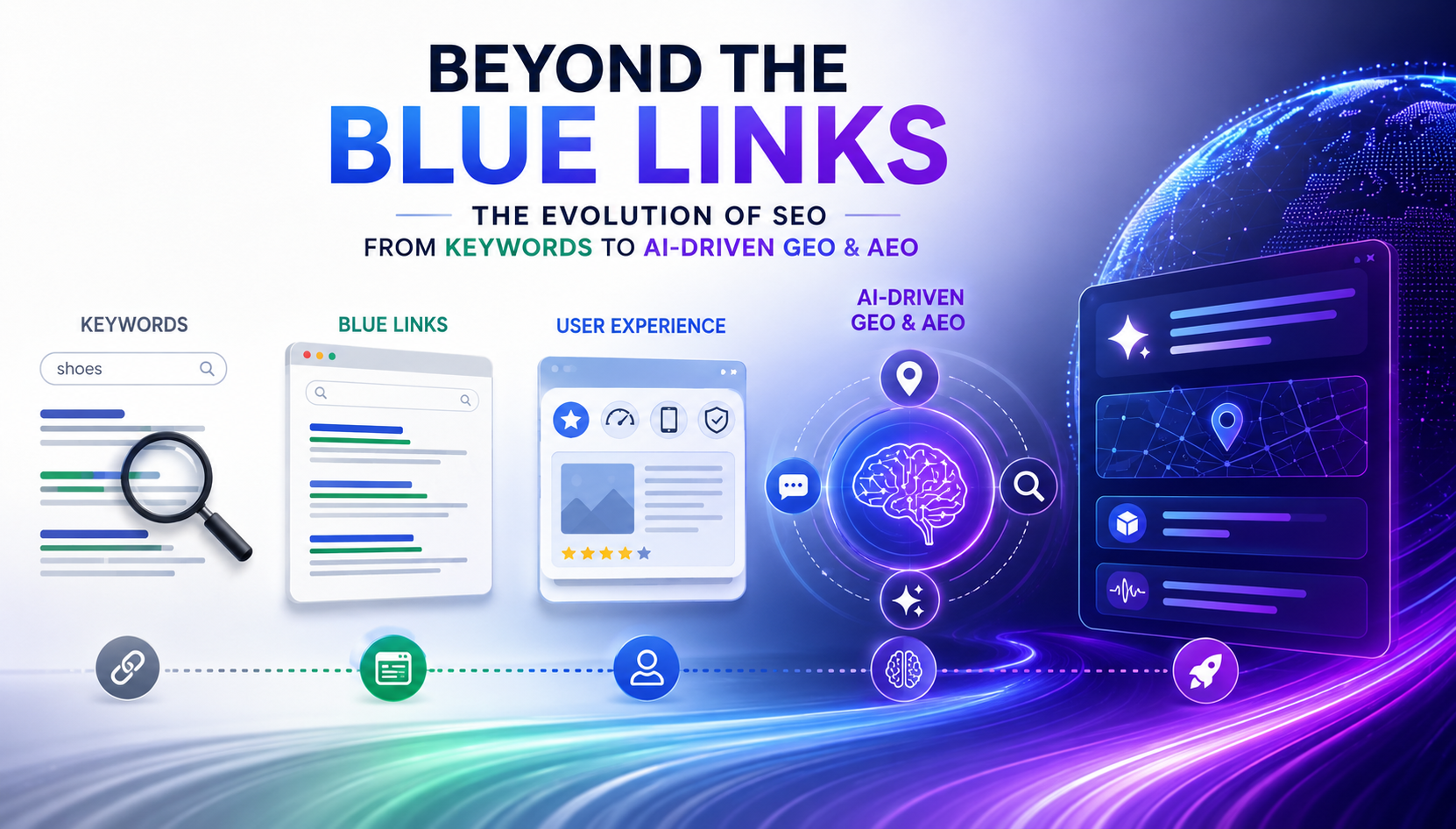
Beyond the Blue Links: The Evolution of SEO from Keywords to AI-Driven GEO & AEO -

How AI is Transforming Digital Marketing? -
Top Digital Marketing Trends You Should Know in 2026 -

What is Digital Marketing? A Complete Beginner Guide 2026 -
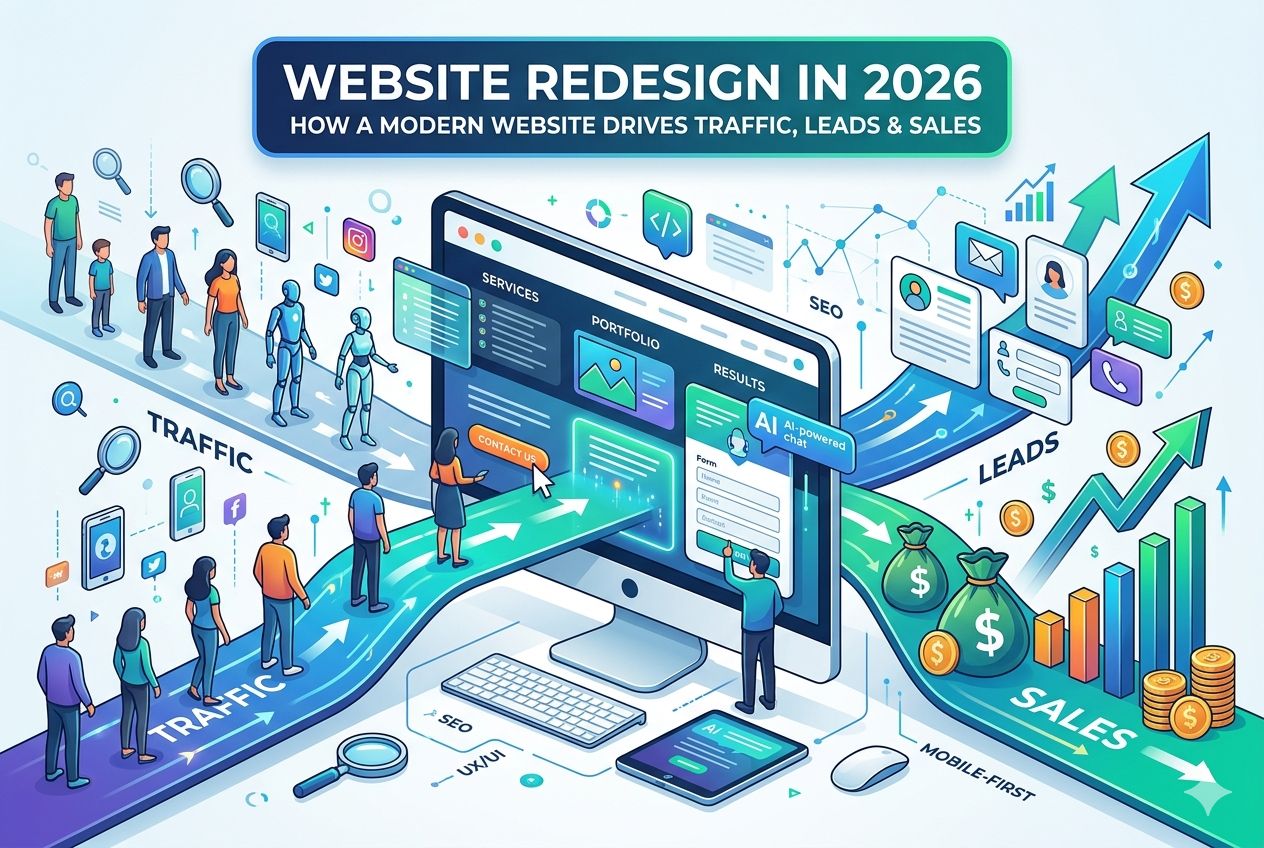
Website Redesign in 2026: How a Modern Website Drives Traffic, Leads & Sales
Happy Customers
Discover How We’ve Helped Our Clients Achieve Their Goals.
Our Tools
Showcasing Our Impact and Innovation.



Let’s Connect And Make Unique And Memorable Identity Of Your Brand!
Get In Touch
We’d Love To Hear From You
Let’s work
together

×